
Where sixth-graders
read the land.
Fieldwork station on forty acres of restored tallgrass prairie and riparian corridor. Certified naturalist-led programs for school groups, corporate teams, and homeschool co-ops.
Cross-section diagram · Canopy Reserve · not to scale · hover hotspots to explore
Three questions.
Your exact program.
Tell us about your group and we'll route you to the program, naturalists, and calendar dates that match.
Who are you bringing?
Programs for every group,
built around the land.
Forty acres of restored tallgrass prairie and riparian corridor. Three certified naturalists. One place that teaches differently.
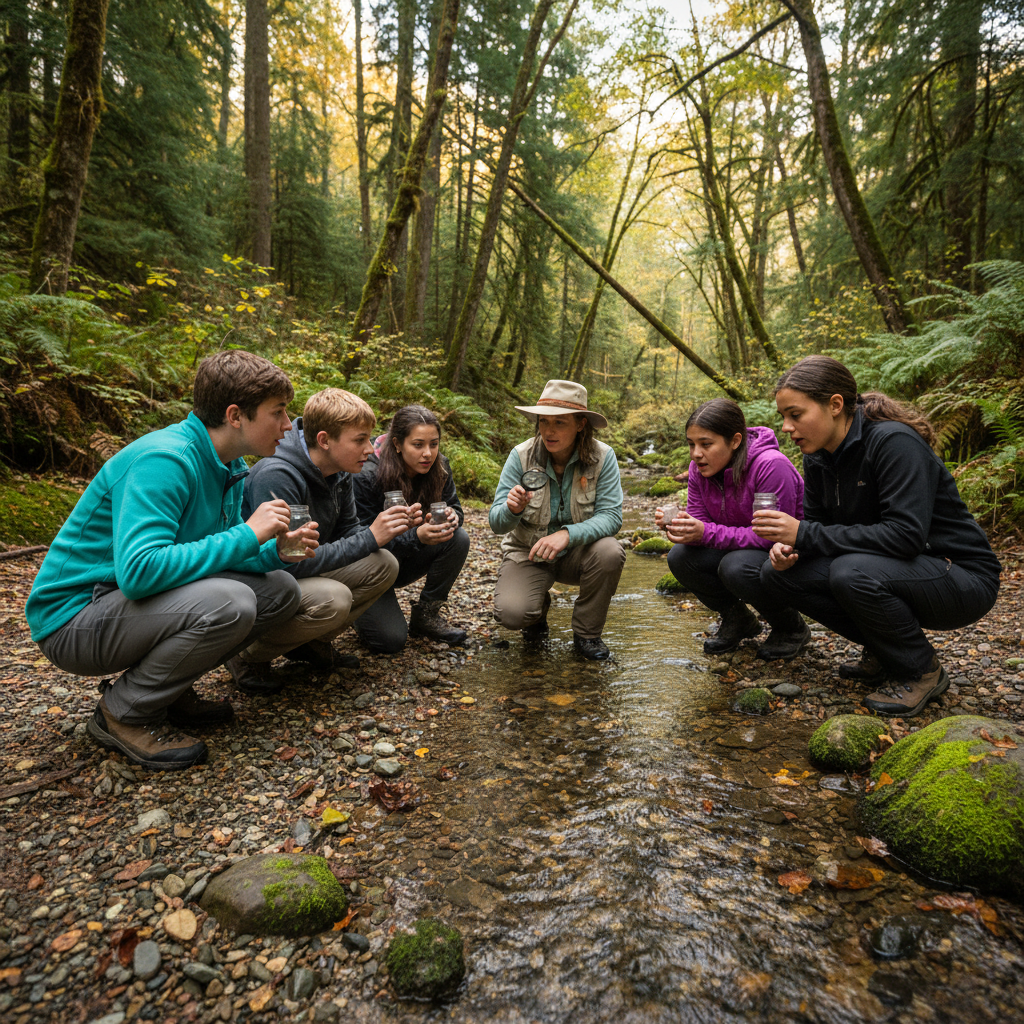
Creek Classroom
Grades 3–12 · Half-day & Full-day
Students press hands into creek mud, collect macroinvertebrates, and learn to read 80-year-old tree rings — all with certified naturalists who know every bend of the riparian corridor.
- ✓Next Generation Science Standards aligned
- ✓Pre-visit lesson plans included
- ✓Bus drop-off & accessible trails
- ✓Educator debrief session included
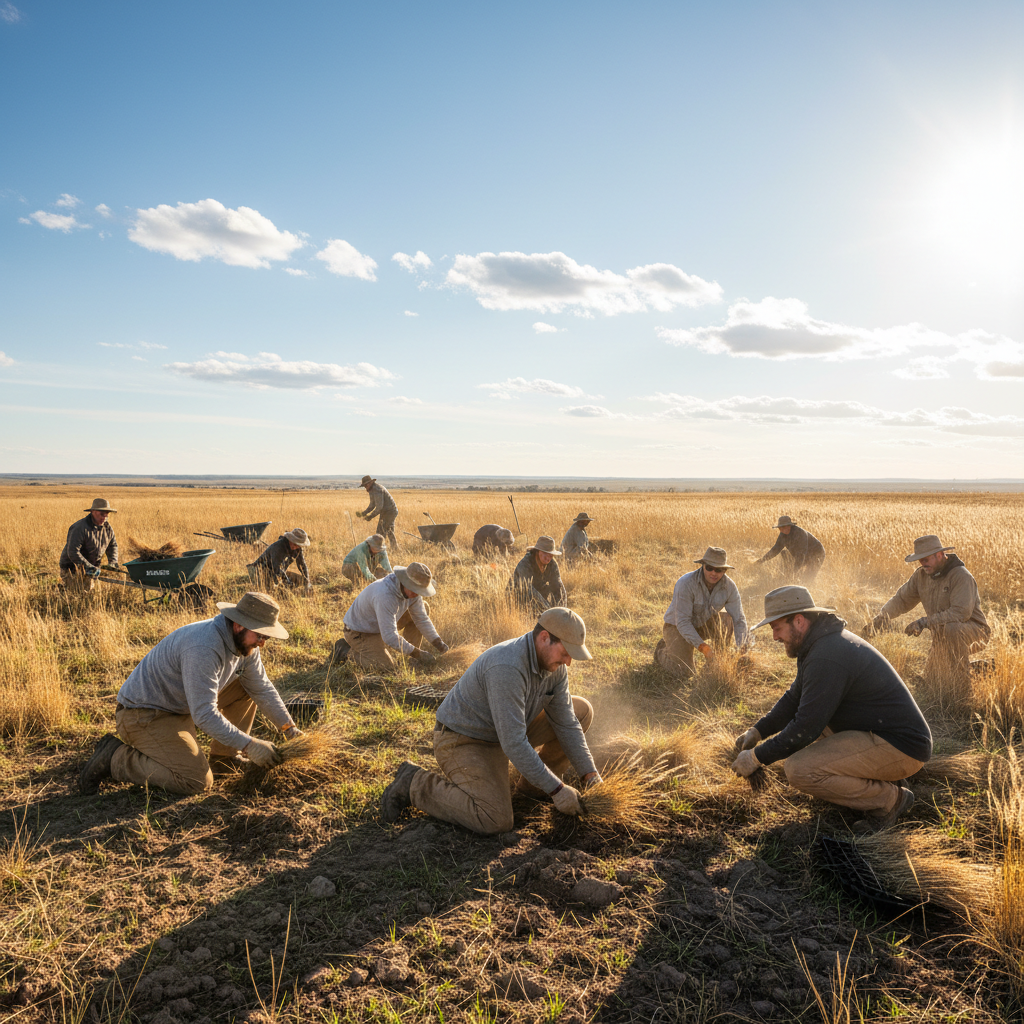
Restoration Retreat
Teams of 8–40 · Full-day & Multi-day
Teams plant native species, map watershed boundaries, and debrief around a fire. Grounded in ecological systems thinking, designed to surface how your team navigates complexity.
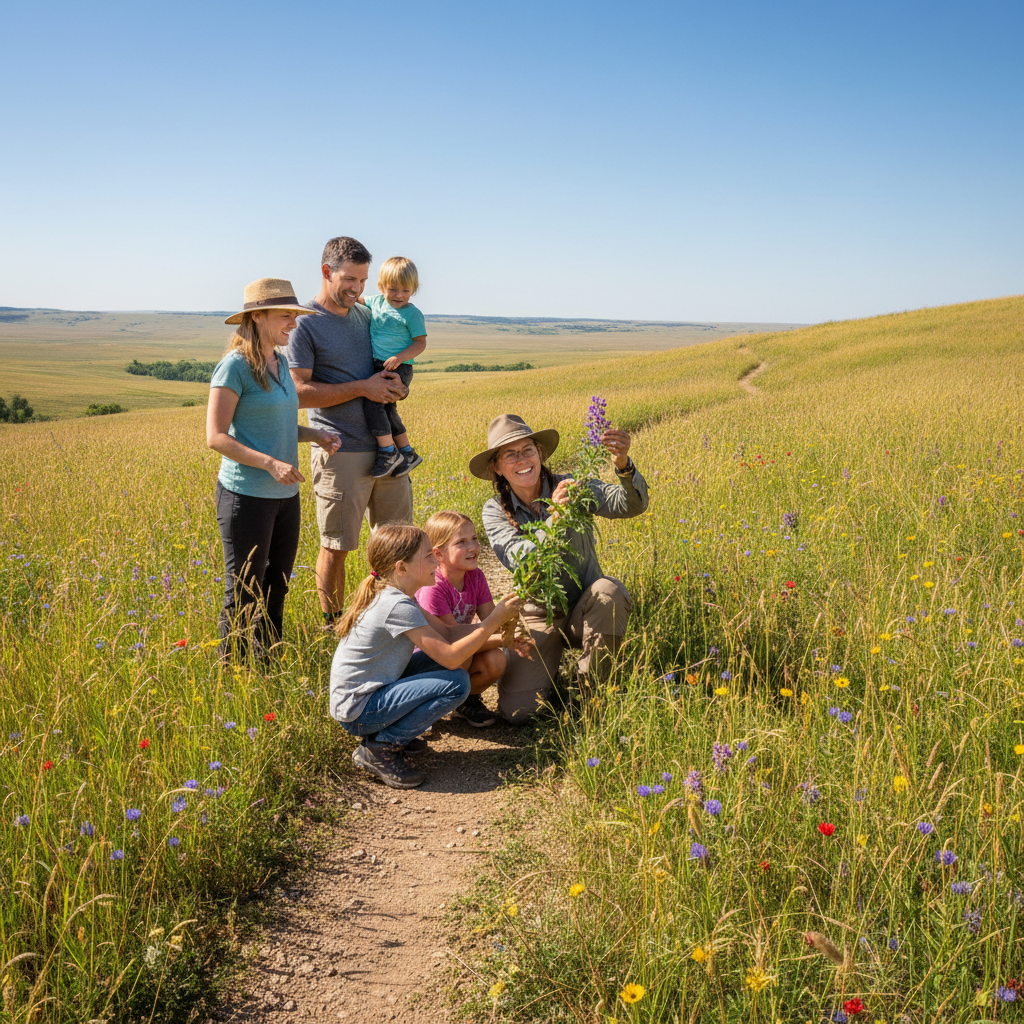
Naturalist Saturdays
Families & co-ops · 3–4 hour sessions
Flexible, naturalist-led Saturday programs for homeschool families and co-ops. Real field science, curriculum-aligned take-home materials, and a pace that follows curiosity.
Forty acres that
teach without speaking.
Every layer of this landscape — canopy to aquifer — is a lesson. The land itself is the curriculum.
Restored tallgrass prairie & riparian corridor
Native plants & animals documented on-site
Certified educators with field science degrees
Of active prairie & woodland restoration
Riparian Corridor
Half a mile of restored creek bank. Macroinvertebrate diversity, water chemistry stations, and seasonal flood pulse dynamics.
Tallgrass Prairie
28 acres of restored big bluestem and Indian grass — roots reaching 12 feet underground, holding topsoil that's been accumulating for 8,000 years.
Oak-Hickory Canopy
Bur oaks with cores dating to 1941. Students use increment borers to read the record of drought, flood, and fire in annual rings.
Dark Sky Reserve
Bortle Class 4 skies. Night sessions include bat acoustics, owl call-and-response, and nocturnal invertebrate surveys under UV light.
From the groups
who came before you.
"My students found a crayfish species that hadn't been recorded in this watershed in eleven years. The naturalist's face lit up the same way my kids' did. That's real science."
Denise Kowalczyk
Fifth-Grade Science Teacher
Jefferson Elementary, Champaign USD 116
"We've done ropes courses, escape rooms, trust falls. Canopy was the first retreat where our team actually talked about how we make decisions — not because a facilitator told us to, but because the prairie made us."
Marcus Oyelaran
VP Sustainability
Meridian Logistics Group
"My daughter has been talking about tree rings for three weeks. She made a timeline comparing the drought years in the core sample to her grandfather's farming journal. Canopy started that."
Sarah Beth Hollins
Homeschool Co-op Organizer
Prairie Roots Co-op, Bloomington IL
"The pre-visit lesson plans saved me four hours of prep. By the time we arrived, students already knew what a riffle was. The naturalists took it from there — and took it somewhere I couldn't have."
James Adeyemi
Curriculum Coordinator
Lincoln Park District Schools
"I was skeptical that 'planting prairie grass' would land with our engineers. By noon, three of them were debating mycorrhizal networks like it was a system architecture problem. We booked a return date on the bus home."
Priya Chandrasekaran
Director of ESG Programs
Highfield Infrastructure Partners
"The night sky session was the moment my kids realized how much they don't know — and were excited about it. Bat acoustics at 9pm with a field guide and a headlamp. Nothing else does that."
Tomás Reinholt
Homeschool Parent
Independent — Peoria, IL
Reserve your
Field Day.
Dates fill 6–8 weeks ahead in spring. Submit your request and a naturalist will confirm within one business day.